SURFACE FINISHING / FIVE POSSIBILITIES

Protection.
Colour.
The right coating.

A component’s surface contributes to its performance. Explore project-specific coating options for protective fan guards, wire parts and metal assemblies.

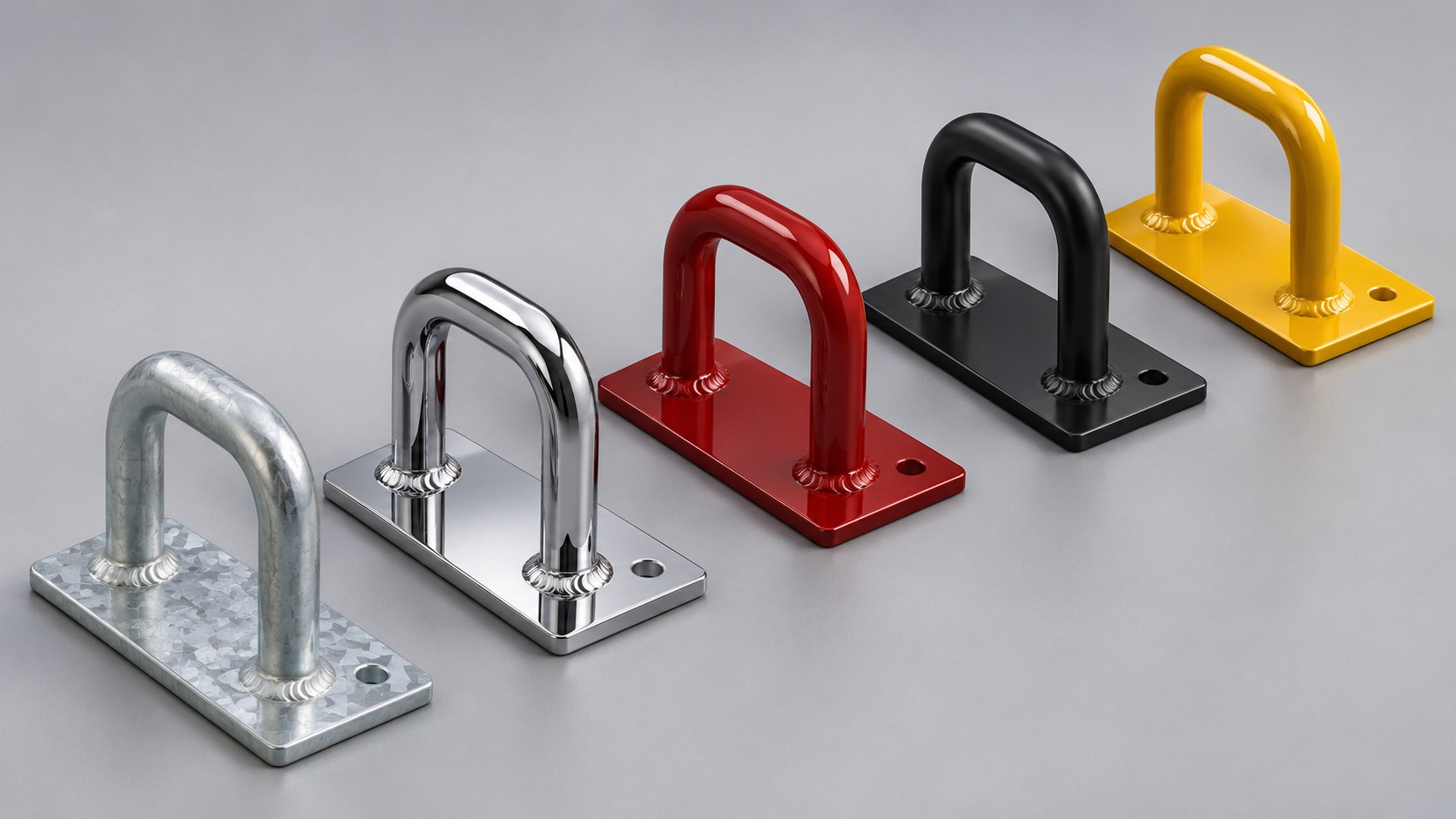
Illustrative steel samples showing zinc, chrome, powder coating, electrocoat and wet-painted finishes
  1. 01Galvanizing
  2. 02Chrome plating
  3. 03Powder coating
  4. 04Cataphoresis
  5. 05Wet painting
Five surface possibilities · Illustrative finish samples, not production photographs. Final colour and appearance are confirmed using agreed specifications and samples.

Project-specific surface coating

Start with the product’s operating environment, then tell us the protection, appearance and interfaces your component requires.

01
Zinc-coated steel

Galvanizing

Zinc protection for steel.

A zinc-based metallic coating that helps protect the steel surface against corrosion.

When to consider it
When practical metallic corrosion protection is the priority.
What to define
Zinc process, coating thickness, appearance and service environment.
Request this coating ↗
02
Bright metallic finish

Chrome plating

A reflective metal finish.

A plated surface with a bright metallic appearance, selected around the component and specification.

When to consider it
Visible components where a polished metallic appearance matters.
What to define
Appearance, plating layers, preparation and corrosion requirements.
Request this coating ↗
03
Colour & texture

Electrostatic powder coating

Colour with a durable character.

Dry powder is applied electrostatically and cured to create a continuous coating.

When to consider it
Guards and assemblies that need an agreed colour and appearance.
What to define
Colour reference, gloss, texture, masking and indoor or outdoor use.
Request this coating ↗
04
Immersion-applied coating

Cataphoresis / E-coating

An electrically deposited coating.

An immersion process in which an electric field deposits paint onto conductive metal.

When to consider it
Complex assemblies where coating coverage needs careful review.
What to define
E-coat chemistry, pretreatment, exposure and any topcoat.
Request this coating ↗
05
Project-specific paint system

Wet painting

A liquid-applied finish.

Liquid paint is applied to prepared surfaces using a coating system selected for the project.

When to consider it
Projects requiring a specified liquid paint system or particular appearance.
What to define
Paint chemistry, primer, topcoat, colour, curing and thickness.
Request this coating ↗

Tell us where the product will operate.

Indoor or outdoor use, humidity, chemicals, visual requirements and mounting requirements all influence the technical specification.

01 Material and service environment

02 Required finish, colour and texture

03 Thickness, masking and critical fits

04 Inspection and documented requirements

Request information ↗

Define the system.
Let us define the product.

Can I specify a colour?

Include the requested colour and texture in your enquiry. We will advise on feasibility.

Which finish is best for outdoor use?

The correct choice depends on substrate, exposure and coating system. Include moisture, chemicals and UV conditions.

Can holes or mounting interfaces be masked?

Mark surfaces that must stay free of coating, critical fits and electrical contact points on the drawing.

Process availability, component suitability and final coating requirements are reviewed per project. Illustrations do not represent a certified performance rating.
Have a custom project
in mind?

Talk to VOLL ↗